What is Airsoft?
Airsoft is a competitive team sport in which players use airsoft replicas — realistic-looking devices that fire small spherical plastic BBs using compressed air or gas — to simulate tactical combat scenarios. The sport is built on a foundation of personal honesty: when a player is hit by a BB, they call their own hit and leave the field. There are no external systems to confirm or deny hits. Airsoft works because the players choose to make it work.
This principle — that the integrity of the game rests entirely with the players — is what makes airsoft genuinely unique among sports. It is not a game policed by referees or technology. It is a sport that self-selects for honesty, because players who do not call their hits are quickly unwelcome in the community. The consequence of poor sportsmanship is social, not institutional, which makes it all the more effective.
Airsoft is played worldwide, from casual weekend skirmishes at dedicated fields to large-scale multi-day military simulation events involving hundreds of players across vast outdoor terrain. The sport encompasses an enormous range of experiences — from ten minutes of CQB (close-quarters battle) in a small indoor arena to full-day mil-sim events like AUTUMN FEST at Loksa's Suurpea grounds, where entire operational scenarios unfold across a day of sustained play.
In Estonia, airsoft has a thriving community of players at every level. The N.A.C. organisation maintains some of Estonia's most active airsoft event calendars, including regular public games, seasonal events and the prestigious AUTUMN FEST season closing game. Whether you are curious about trying airsoft for the first time or looking to deepen your experience with mil-sim gameplay, Estonia offers excellent opportunities to participate.
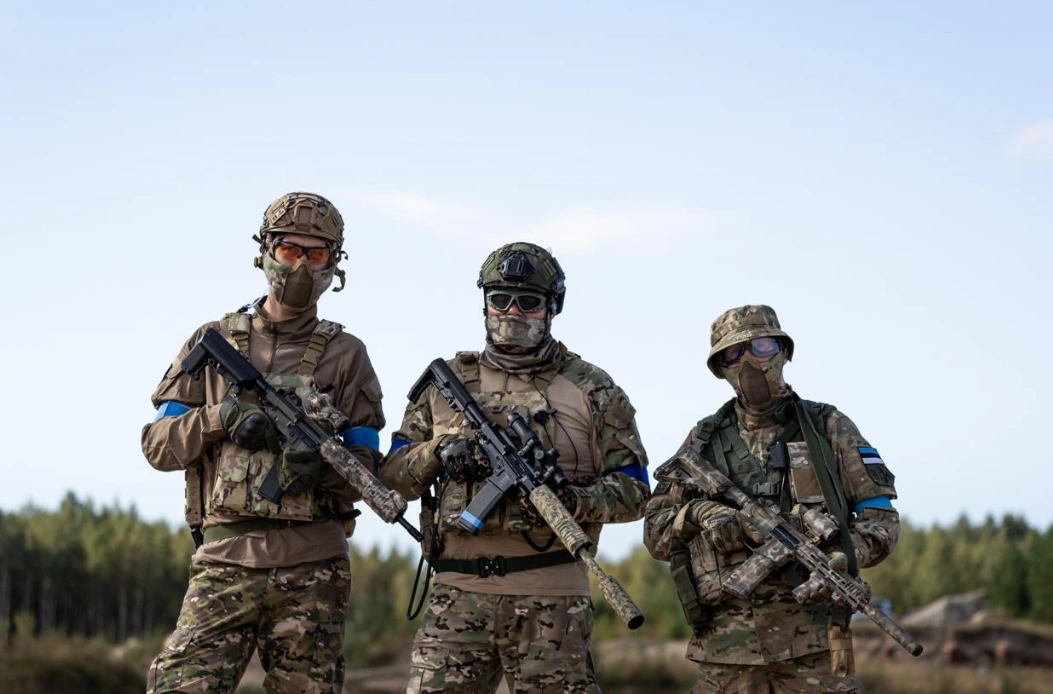
The History of Airsoft
Airsoft originated in Japan in the 1970s. Strict firearms laws in Japan made it illegal for civilians to own real firearms, creating a demand for realistic-looking replicas for collectors and enthusiasts. Japanese manufacturers responded by developing spring-powered and, later, gas-powered devices that fired soft plastic pellets — visually and mechanically convincing replicas that were legal to own.
The sport spread rapidly through Asia during the 1980s and reached Europe and North America during the 1990s. As replica technology improved — automatic electric guns (AEGs) emerged in the late 1980s and quickly became the dominant platform — the sport grew in both scale and sophistication. Dedicated airsoft fields opened across the world. Communities formed around game formats, equipment modifications, and event organisation.
Today, airsoft is played in over 50 countries. Its formats range from competitive CQB (close-quarters battle) leagues to massive annual mil-sim events drawing hundreds of players. In Estonia, the sport has been growing steadily since the early 2000s, with organisations like N.A.C. building a reputation for professionally organised events that prioritise safety, quality of gameplay and community values.
The evolution of airsoft replicas has been significant. Modern AEGs offer adjustable rate of fire, programmable trigger units, and energy outputs calibrated to specific range and safety requirements. Gas blowback replicas simulate the recoil of real firearms. The equipment has become sophisticated enough that the limiting factor in most games is the skill and teamwork of the players rather than the capabilities of their replicas.
Types of Airsoft Replicas
Understanding the types of airsoft replicas helps new players choose the right equipment for their style of play. There are three main power systems in widespread use.
Automatic Electric Guns (AEGs)
AEGs are the most common type of airsoft replica. They use a rechargeable battery to drive an electric motor that cycles a gearbox, compressing and releasing air to fire BBs. AEGs offer a good balance of reliability, consistency and ease of maintenance. They typically operate in semi-automatic and fully automatic modes. For outdoor field play and mil-sim events, AEGs are the standard choice.
Gas-Powered Replicas
Gas replicas use compressed gas (typically green gas, propane or CO2) to fire BBs. They are valued for the realistic blowback cycle that simulates the feel of a real firearm. Gas blowback pistols are widely used as sidearms. Gas blowback rifles offer a highly realistic shooting experience but require more maintenance and are more sensitive to temperature changes than AEGs.
Spring-Powered Replicas
Spring replicas must be manually cocked before each shot, making them single-shot devices. They are used almost exclusively in the bolt-action sniper role, where the tactical limitation of one shot per action is offset by higher power output and exceptional accuracy. In most field games, bolt-action sniper replicas are subject to specific joule limits and minimum engagement distances.
Types of Airsoft Game Formats
Airsoft encompasses several distinct game formats, each offering a different experience and requiring different equipment, skills and mindset.
CQB — Close-Quarters Battle
CQB games are played in small, enclosed spaces — typically purpose-built indoor arenas, buildings or tight outdoor structures. Engagement distances are short, action is fast, and there is little time for long-range planning. CQB is physically intense and demands quick reflexes. It is often the entry point for new players due to the accessibility of CQB fields and the shorter time commitment of individual sessions. Lower joule limits apply in CQB environments due to the close engagement distances.
Outdoor Field — Skirmish
Standard outdoor field play — known as skirmishing — takes place on dedicated outdoor sites with varied terrain. Games typically involve team-based objectives (capture the flag, domination, attack and defend) played in sessions of 20 to 45 minutes with respawn mechanics. This is the most common format for regular weekly or weekend airsoft play. It is accessible, social and a great way to develop outdoor airsoft skills without the commitment level of a mil-sim event.
Mil-Sim — Military Simulation
Military simulation is airsoft at its most immersive and demanding. Events run for a full day across large outdoor terrain, using structured factions, command hierarchies and scenario-based objectives. Hits typically carry heavier consequences — longer respawn times, limited respawns or scenario-specific mechanics that give decisions real weight. Equipment requirements are stricter in terms of authenticity. Communication, teamwork and sustained mental and physical engagement are essential.
AUTUMN FEST is a mil-sim event. Players who have experienced both standard skirmishing and their first mil-sim event consistently describe the difference as profound. The level of immersion, the quality of teamwork it demands, and the memories it produces are categorically different from a casual game.
Speed Airsoft
Speed airsoft, sometimes called competitive airsoft or speedsoft, prioritises fast movement and rapid target engagement over tactical simulation. Players use lightweight equipment optimised for speed. Games are scored and timed. This format prioritises individual skill and physical fitness over team strategy and immersion.
The Honour System
No aspect of airsoft is more fundamental than the honour system, and no aspect is more important to understand before attending any game.
In airsoft, there is no technology that confirms hits. BBs are small, light and leave no visible mark that can be seen clearly at game speeds and distances. Players who are hit feel the impact — a light sting from the BB — and it is their personal responsibility to call that hit. Out loud, visibly, and immediately. They then follow the game's designated procedure for acknowledged hits.
Players who choose not to call their hits — who keep playing after being hit — are cheating. More than cheating: they are destroying the experience for everyone else who has chosen to play with integrity. In the airsoft community, a reputation for not calling hits travels fast. Players who are known to tank hits find themselves unwelcome at events, uninvited by teams, and excluded from the community that makes the sport valuable.
Conversely, players who call their hits reliably, who acknowledge even the marginal impacts that might be disputed, who prioritise the integrity of the game over personal advantage — these players earn enormous respect. They are the foundation of the airsoft community.
The N.A.C. community values this principle deeply. At AUTUMN FEST and all N.A.C. events, the honour system is not just a rule in the rulebook. It is the culture. If you attend an N.A.C. event, you are expected to call every hit, regardless of whether you think anyone saw it, regardless of whether it stings, regardless of any tactical consideration. This is not negotiable.
Benefits of Playing Airsoft
Airsoft offers a distinctive combination of physical, mental and social benefits that distinguishes it from most other competitive activities.
Physical Fitness
Field airsoft is physically demanding. A full day of outdoor play involves sustained movement across varied terrain, carrying equipment, making quick physical decisions and maintaining performance over hours of play. Players who play regularly report improvements in endurance, agility and general physical fitness. The physical engagement is purposeful — every movement has a tactical reason — which makes it more motivating than gym exercise for many people.
Teamwork and Communication
No other commonly available sport requires the level of real-time communication and team coordination that mil-sim airsoft demands. Units that do not communicate effectively fail. Leaders who cannot convey clear orders under pressure expose their teams to failure. This is not hypothetical: it plays out in real time, under physical and cognitive stress, in scenarios that change unpredictably.
The communication skills developed through airsoft — clarity under pressure, listening while acting, adapting plans rapidly to changed information — are directly transferable to professional environments. Many companies have discovered airsoft as a genuinely effective team-building activity for exactly this reason. If you are looking for a team-building activity that creates real shared experience and genuine skills development, airsoft delivers in a way that conventional team-building activities simply cannot.
Decision-Making Under Pressure
In airsoft, decisions have immediate consequences. The wrong route is an ambush. The delayed order is a missed objective. The uncoordinated advance fails against a prepared defence. Players who participate in airsoft regularly develop an improved capacity for calm, rapid decision-making under conditions of uncertainty and time pressure. This is a skill with obvious value far beyond the game itself.
Social Community
The airsoft community is one of its least-discussed but most significant benefits. It connects people across age groups, professions and backgrounds through shared interest and shared experience. The bonds formed through a day of hard play at an outdoor field, or through a full-day mil-sim event like AUTUMN FEST, are genuinely strong. Regulars in any airsoft community describe it as more than a sport — it is a social network built on mutual respect and shared values.
Airsoft Safety
Safety in airsoft is taken seriously at all well-run events, and N.A.C. events are no exception. The following safety principles apply universally.
Eye protection is mandatory at all times in the game zone. This is the single most important safety rule in airsoft. A BB to an unprotected eye can cause serious permanent injury. Full-seal goggles rated for airsoft impact are required — not glasses, not shooting glasses, but goggles that prevent a BB from reaching the eye from any angle. This rule is non-negotiable at every N.A.C. event.
Joule limits are enforced to ensure that replicas do not fire BBs with enough energy to cause injury at the engagement distances typical in different game zones. These limits are different for CQB versus outdoor field play, and for different replica types. They are published ahead of every event and verified through chronographing.
Minimum engagement distance (MED) rules specify the closest distance at which a replica may be fired. At very close range, even within legal joule limits, a BB can cause injury. MED rules prevent this by requiring players to call surrender (offer a player the choice to acknowledge a hit without being shot) when within MED. Surrenders must always be offered in good faith — they cannot be used as an ambush tactic.
Dead zones and safe areas are designated spaces where replicas must be on safe and may not be aimed at other players. These areas exist for practical reasons (transition between game areas, medical situations) and must be respected at all times.
Airsoft in Estonia
Estonia has an active and growing airsoft community, supported by established organisations that maintain high standards for event management, safety and player culture. The N.A.C. (Naissaare Airsoft Club) is one of the most active organisations in the country, operating regular public events at multiple locations and maintaining a calendar of special events that includes seasonal games, corporate packages and the annual AUTUMN FEST season closing event.
For general information about airsoft in Estonia — rules, equipment standards, community events and more — airsoftwiki.ee is a community-maintained resource that covers the sport comprehensively in the Estonian context. It is an excellent starting point for anyone new to airsoft in Estonia or looking to deepen their understanding of the sport.
Public N.A.C. events are listed and managed through naissaareairsoft.ee. The site lists active registration for upcoming events and provides all information needed to register and attend. Events cater to all experience levels — from complete beginners attending their first game to veterans looking for competitive mil-sim engagement.
How to Get Started
Getting started in airsoft is straightforward. Most airsoft fields and events offer equipment rental for first-time players — you do not need to own your own replica to attend your first game. Eye protection that meets field standards is always available, and basic protective gear can typically be borrowed or rented.
For your first game, consider the following steps:
- Check the current event calendar on naissaareairsoft.ee for an upcoming public game suitable for beginners
- Read the event's rules and safety information before attending
- Arrive early for the safety briefing — this is mandatory and essential
- Start with borrowed or rented equipment to understand what you enjoy before investing in your own gear
- Ask questions of more experienced players — the airsoft community is generally welcoming and happy to help newcomers understand the game
- Call every hit, every time, without exception — this is how you earn respect and how the game works
If you are interested in progressing toward mil-sim play like AUTUMN FEST, experience at regular field games first is valuable preparation. Understanding the honour system, the basic game mechanics and the physical demands of outdoor airsoft will make your first mil-sim event significantly more rewarding.
Ready to experience Estonian airsoft? Check naissaareairsoft.ee for active public events, or submit a request here to learn more about AUTUMN FEST.